
Download DC Civil Rights Tour App


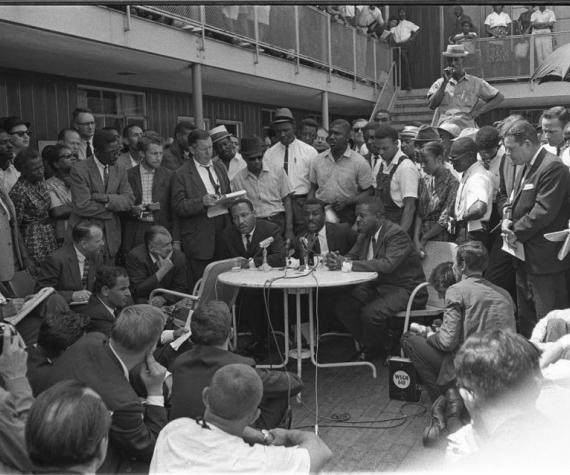
Arthur George "A.G." Gaston, one of Birmingham's most successful Black entrepreneurs, opened the Gaston Motel in 1954 to give Black travelers a place to stay that offered "something fine," at a time when segregation kept them out of the city's other hotels. By 1963, it had become the highest-quality accommodation available to Black guests in Birmingham. That spring, the motel took on a much bigger role: Dr. Martin Luther King Jr., Reverend Ralph Abernathy, and Reverend Fred Shuttlesworth used it as their headquarters for the Birmingham Campaign, known as "Project C," a direct-action push against the city's segregation laws. King himself stayed in Room 30, which became known as the movement's "war room," and it was there that he made the decision to defy a court injunction and go to jail alongside local protesters. A.G. Gaston, who'd initially urged patience rather than protest, ultimately paid King's $160,000 bond.
On May 10, 1963, civil rights leaders and white business leaders announced an agreement to end the demonstrations, with the press conference held right in the motel's courtyard. Two days later, in direct retaliation, bombs exploded near King's room and at the home of his brother, setting off riots across the city. The bombing, like the rest of the violence in Birmingham that spring, drew national attention and helped build the political pressure that led to the passage of the Civil Rights Act of 1964. Today, the Gaston Motel is part of the Birmingham Civil Rights National Monument, established in 2017, and stands not only as a landmark of the movement but as a monument to Black entrepreneurship during segregation.

