
Download DC Civil Rights Tour App


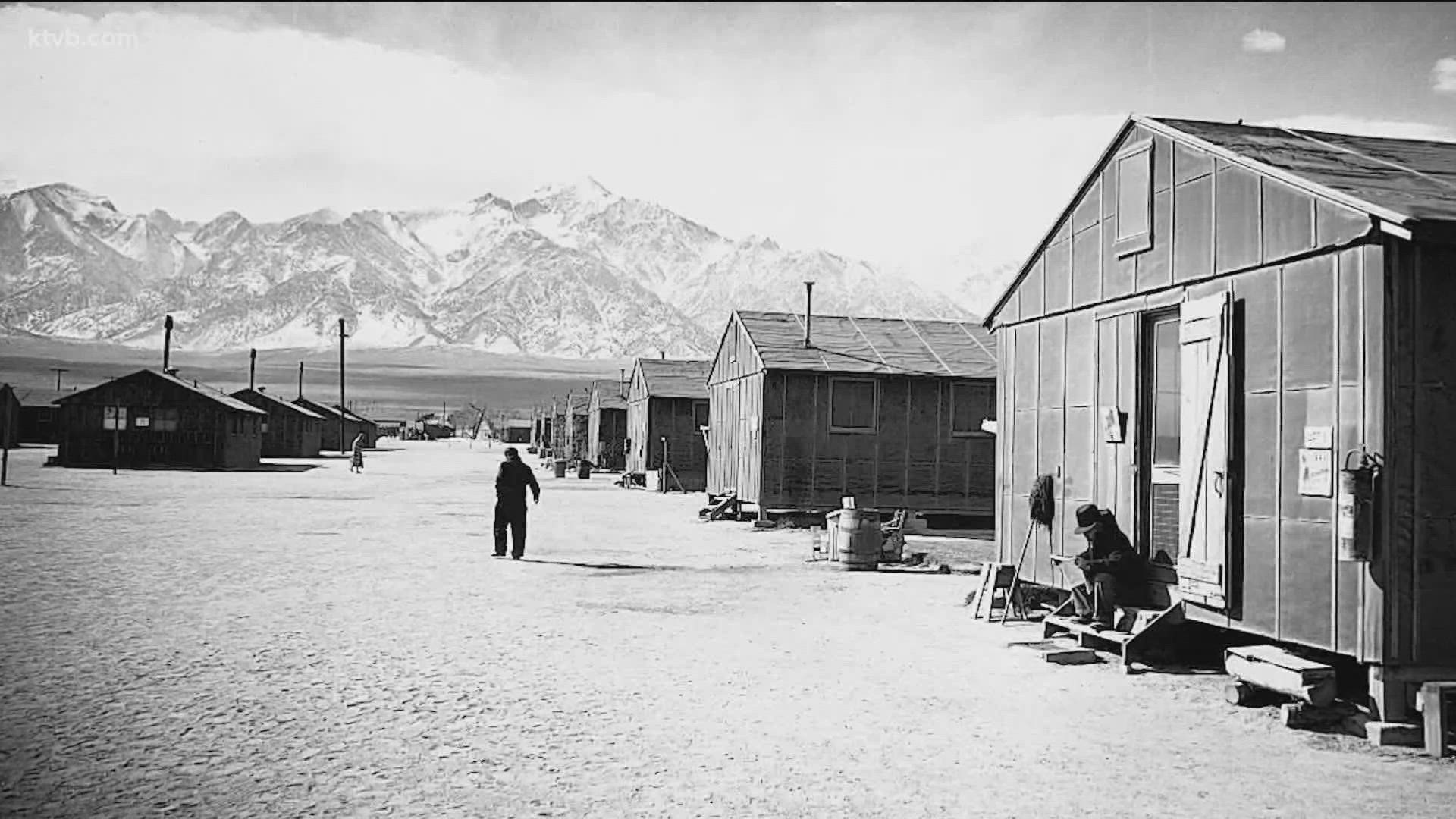
After Pearl Harbor was attacked, people across the country turned against Japanese Americans out of fear. In February 1942, President Roosevelt signed Executive Order 9066, which let the government force people of Japanese ancestry off the West Coast. Over 120,000 Japanese Americans, most of them U.S. citizens, had to leave their homes, jobs, and belongings behind and were sent to incarceration camps in remote areas. One of these was Minidoka, out in the Idaho desert, which opened in August 1942 and eventually held almost 13,000 people, mostly families from Washington, Oregon, and Alaska. At one point it was so big it would've been the seventh-largest city in the whole state.
Life there was rough. People lived in barracks covered in tar paper, surrounded by barbed wire and guard towers, and had to deal with brutal desert heat and dust storms they weren't used to. Even when they worked skilled jobs like nursing, they got paid way less than people outside the camps doing the same work. Still, people at Minidoka managed to build schools, hold religious services, play sports, and keep some sense of normal life going, and some even resisted outright, like the hundreds of young men who refused to be drafted while they were locked up. Minidoka shut down in 1945 when the war ended, and now it's a National Historic Site that reminds people how fear during wartime led the government to trample the rights of thousands of its own citizens.

