
Download DC Civil Rights Tour App


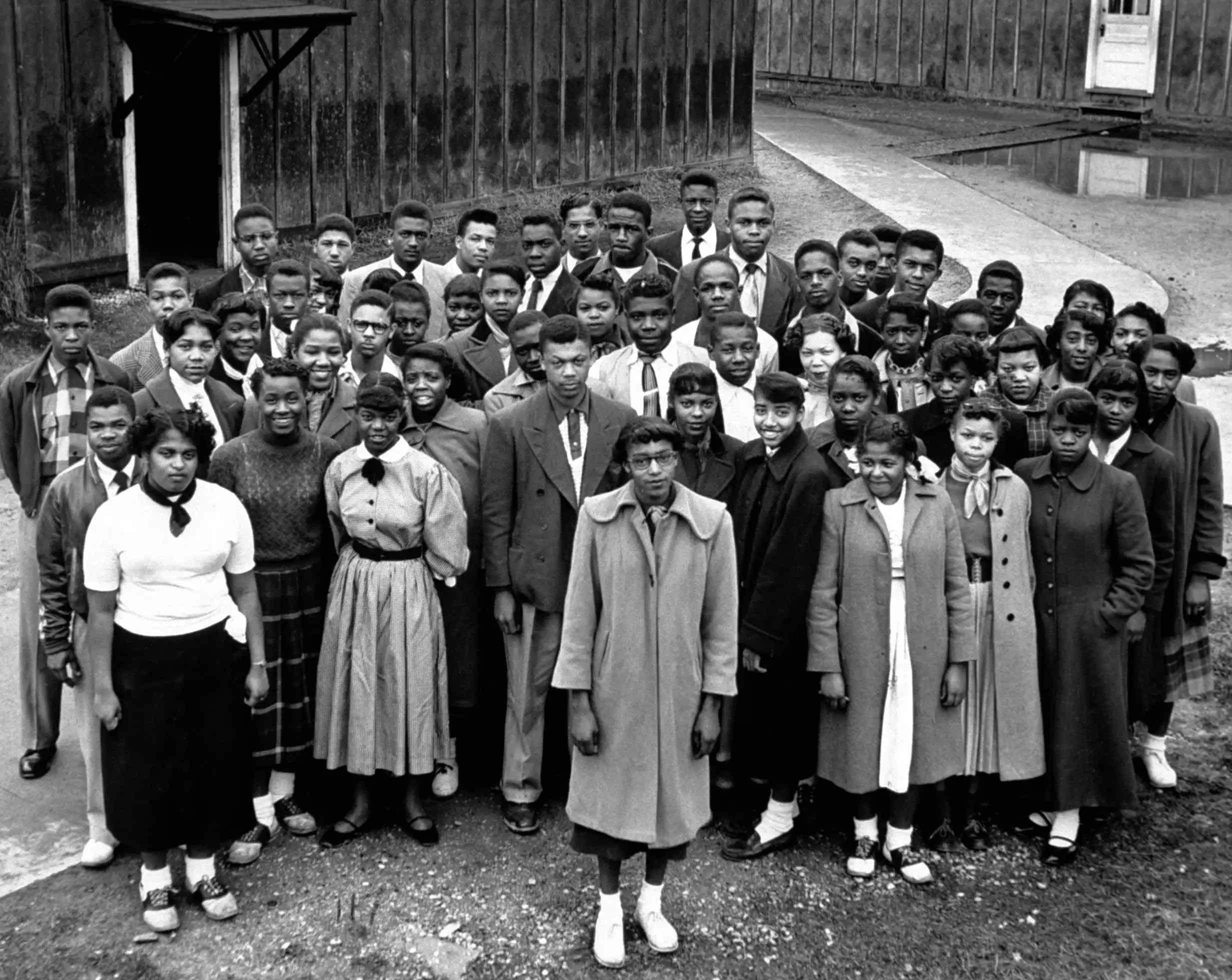
On April 23, 1951, a sixteen-year-old student named Barbara Johns decided she'd had enough. She led her classmates at Robert Russa Moton High School in Farmville, Virginia, on a walkout to protest how bad their school's conditions really were. Moton was built for half the number of students it actually had, and it didn't even have a gym, cafeteria, or indoor plumbing — extra classrooms were just tar-paper shacks heated by wood stoves. Meanwhile, the white high school down the road had everything the students at Moton didn't. The walkout turned into a two-week strike, and eventually the students reached out to the NAACP for help. Lawyers Spottswood Robinson III and Oliver Hill came to Farmville and agreed to take on their case, but they told the students something important: instead of just fighting for a better segregated school, they should fight to end segregation altogether.
That case became known as Dorothy E. Davis, et al. v. County School Board of Prince Edward County, and it ended up getting bundled together with four other cases into the landmark Brown v. Board of Education. After the Supreme Court ruled in 1954 that public schools had to desegregate, Virginia's leaders fought back with a plan called "Massive Resistance," and Prince Edward County actually shut down its entire public school system for five years, from 1959 to 1964, instead of integrating. Today, the old Moton High School building is a National Historic Landmark and home to the Moton Museum, which tells the story of how a group of students helped kick off the fight to desegregate schools across the country.

