
Download DC Civil Rights Tour App


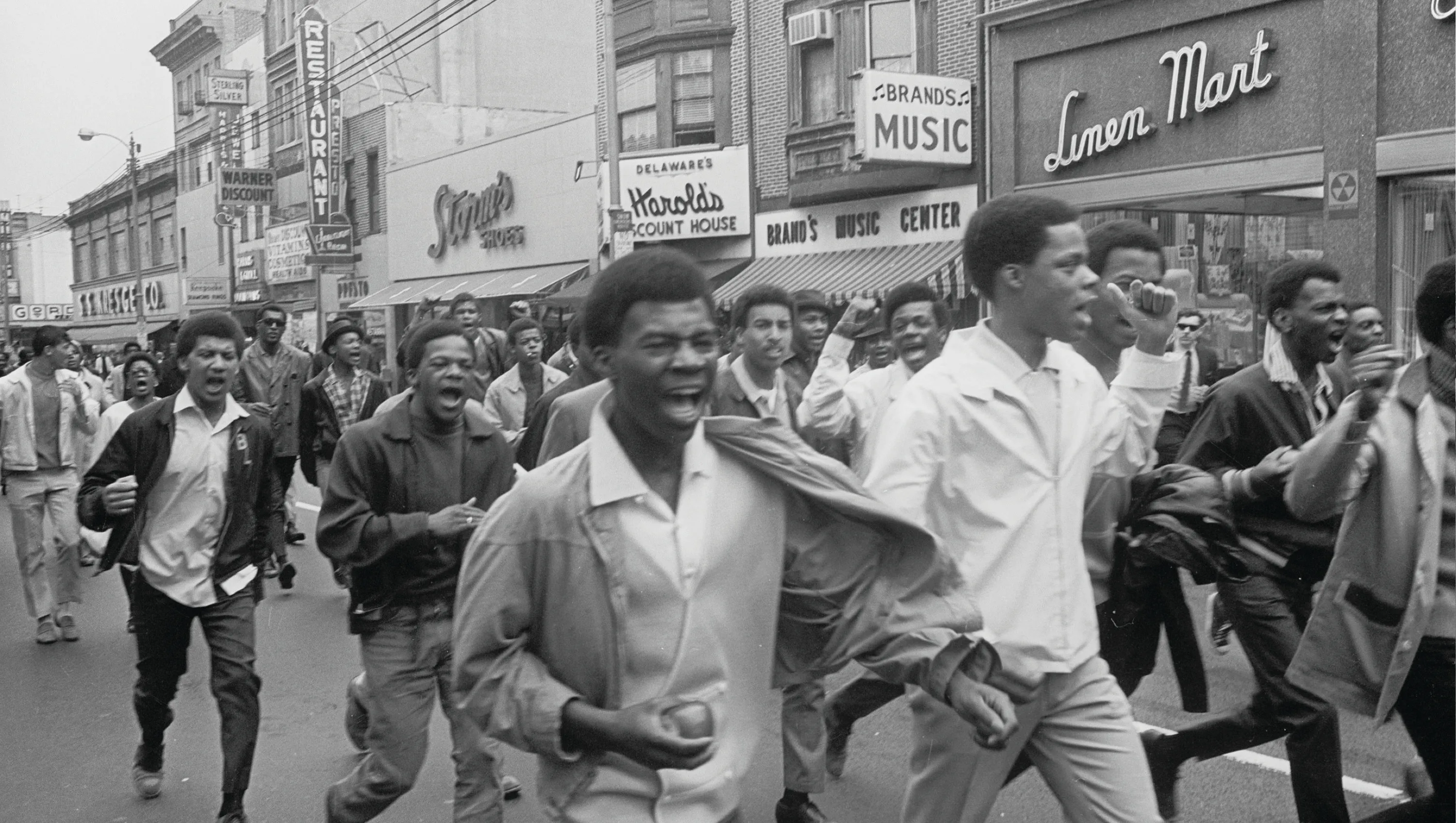
On April 8, 1968, about 1,500 people gathered in Wilmington's Rodney Square to mourn Martin Luther King Jr., who had been assassinated four days earlier. As the day wound down, grief turned into anger, and rioting, looting, and fires broke out across parts of the city over the following two days. No one was killed, and compared to the unrest in many other American cities that spring, Wilmington's riot was actually fairly small, with 40 people injured and 154 arrested. But what happened next set Wilmington apart from almost every other city in the country. Governor Charles Terry ordered 2,800 National Guard troops into Wilmington to patrol "The Valley," a predominantly Black and low-income neighborhood, even though Mayor John Babiarz had only asked for a short-term deployment and the rioting itself had already died down within days.
Even after Terry lost his re-election bid in November 1968, he kept the troops in place, and soldiers continued patrolling Wilmington's streets with loaded rifles for a full nine months, from April all the way through December, harassing residents along the way. It became the longest military occupation of an American city since the Civil War, only ending when a new governor took office in January 1969.

