
Download DC Civil Rights Tour App


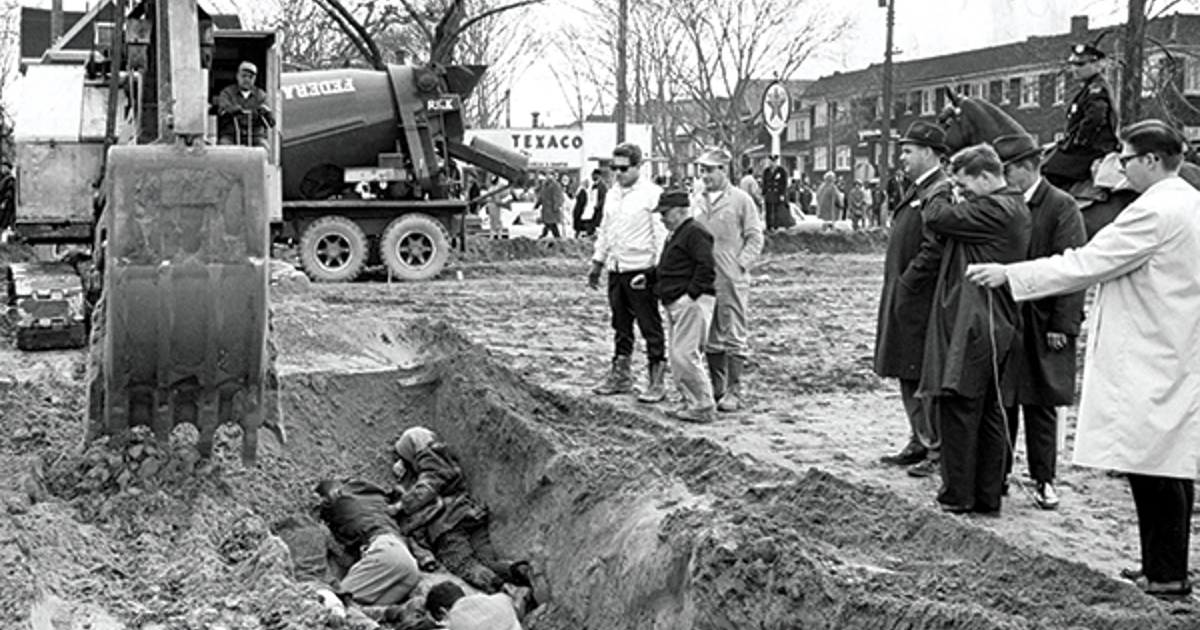
The construction of Stephen E. Howe Elementary School in Cleveland's Glenville neighborhood in 1964 was seen by activists as an intentional attempt to re-segregate schools after Black students had briefly been allowed to attend previously all-white schools .
The United Freedom Movement and the Congress of Racial Equality (CORE) led protests against the school's construction, arguing the school board was building new schools in Black neighborhoods to avoid meaningful integration .
On April 7, 1964, Reverend Bruce Klunder, a 27-year-old white minister and vice president of CORE, was killed when a bulldozer ran over him during a demonstration at the construction site .
Klunder and other protesters had been lying behind the bulldozer to block its progress; the driver reportedly could not hear their warnings over the noise of the machinery .
His death triggered what newspapers called the "City's Worst Rights Violence" up to that point, with 13 people injured and 26 arrested after police used tear gas to disperse crowds that looted and vandalized the area .
In the days following Klunder's death, an estimated 85-95% of Cleveland's Black students participated in a school boycott to demand educational equality .
The NAACP later cited Howe and similar schools as evidence of intentional segregation when it filed Reed v. Rhodes, the federal lawsuit that led to a 1978 court order forcing Cleveland to desegregate its schools through busing .
The former Howe Elementary building, demolished in 2013, is remembered by civil rights veterans as "sacred ground" where a life was sacrificed in the fight for equal educational opportunity

