
Download DC Civil Rights Tour App


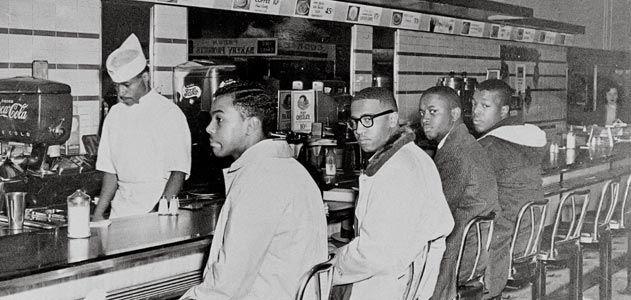
On February 1, 1960, four freshmen from North Carolina A&T — Joseph McNeil, Franklin McCain, Ezell Blair Jr., and David Richmond — walked into the F.W. Woolworth store in downtown Greensboro and sat down at the whites-only lunch counter. They ordered coffee and were refused service, but instead of leaving, they just stayed in their seats until the store closed for the night. The idea wasn't totally spontaneous — the four of them had been talking for a while about racial injustice and nonviolent protest, and one of them had even watched a documentary on Gandhi. Word spread fast, and within days, hundreds of other students joined them at the counter. By February 5, nearly 300 people were taking part, and things got tense — counter-protesters yelled, spat, and even set one protester's coat on fire, but the students stayed peaceful through all of it.
The sit-in lasted almost six months, and it worked. On July 25, 1960, the Woolworth's lunch counter quietly started serving Black customers for the first time. But the impact went way beyond that one store — news coverage of what happened in Greensboro helped kick off a sit-in movement that spread to more than 55 cities in 13 states within just three months, and it helped lead to the creation of the Student Nonviolent Coordinating Committee (SNCC), one of the most important civil rights organizations of the decade. Today, the original Woolworth building is home to the International Civil Rights Center & Museum, where you can actually see the real lunch counter where it all started.

