
Download DC Civil Rights Tour App


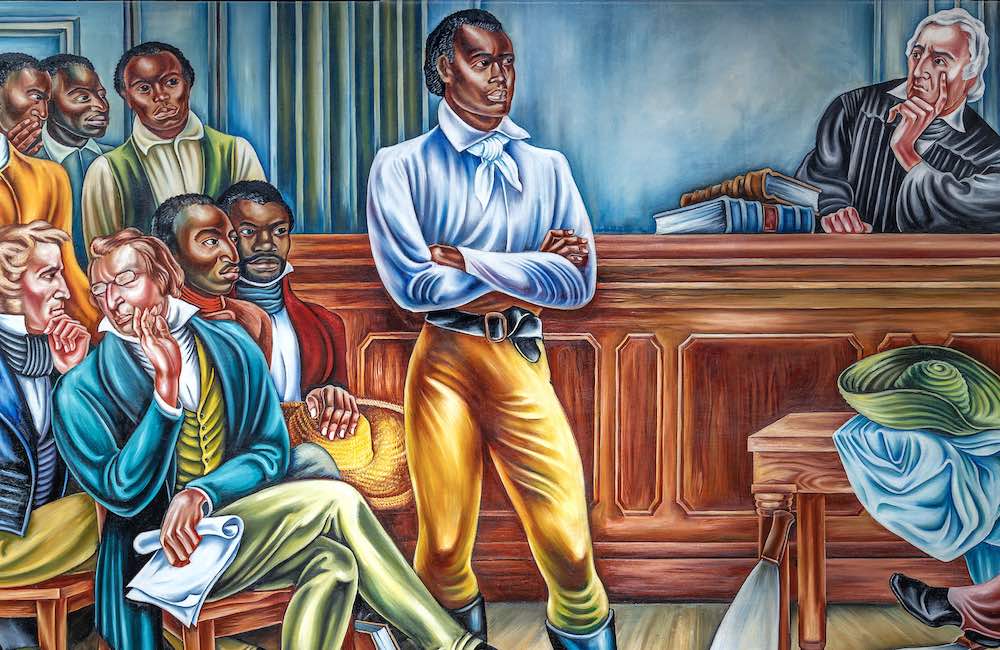
The Amistad case was a landmark moment in the fight against slavery, unfolding in Connecticut between 1839 and 1841. In 1839, a group of 53 Africans, mostly from the Mende people of present-day Sierra Leone, were kidnapped and illegally sold into the Spanish slave trade. They were placed aboard the Spanish schooner La Amistad to be transported to a plantation in Cuba. Led by Sengbe Pieh, known as Joseph Cinqué, the captives revolted, seized control of the ship, and ordered the surviving crew to sail them back to Africa. Instead, the crew secretly steered the vessel north, and the ship was eventually intercepted by the U.S. Navy off the coast of Long Island, New York, before being brought to New London, Connecticut. The Africans were jailed in New Haven while the courts determined whether they were legally enslaved property or free people who had been unlawfully captured. The case drew national attention and made its way to the U.S. Supreme Court, where former U.S. President John Quincy Adams, then serving in the House of Representatives, joined the defense team and argued passionately on the captives' behalf in February 1841. On March 9, 1841, the Supreme Court ruled that the Africans had been illegally enslaved and were free. The decision was celebrated by abolitionists and became a powerful symbol in the broader struggle against slavery and for human rights, and later that year, with the help of abolitionist supporters, many of the Amistad Africans returned home to Sierra Leone.

