
Download DC Civil Rights Tour App


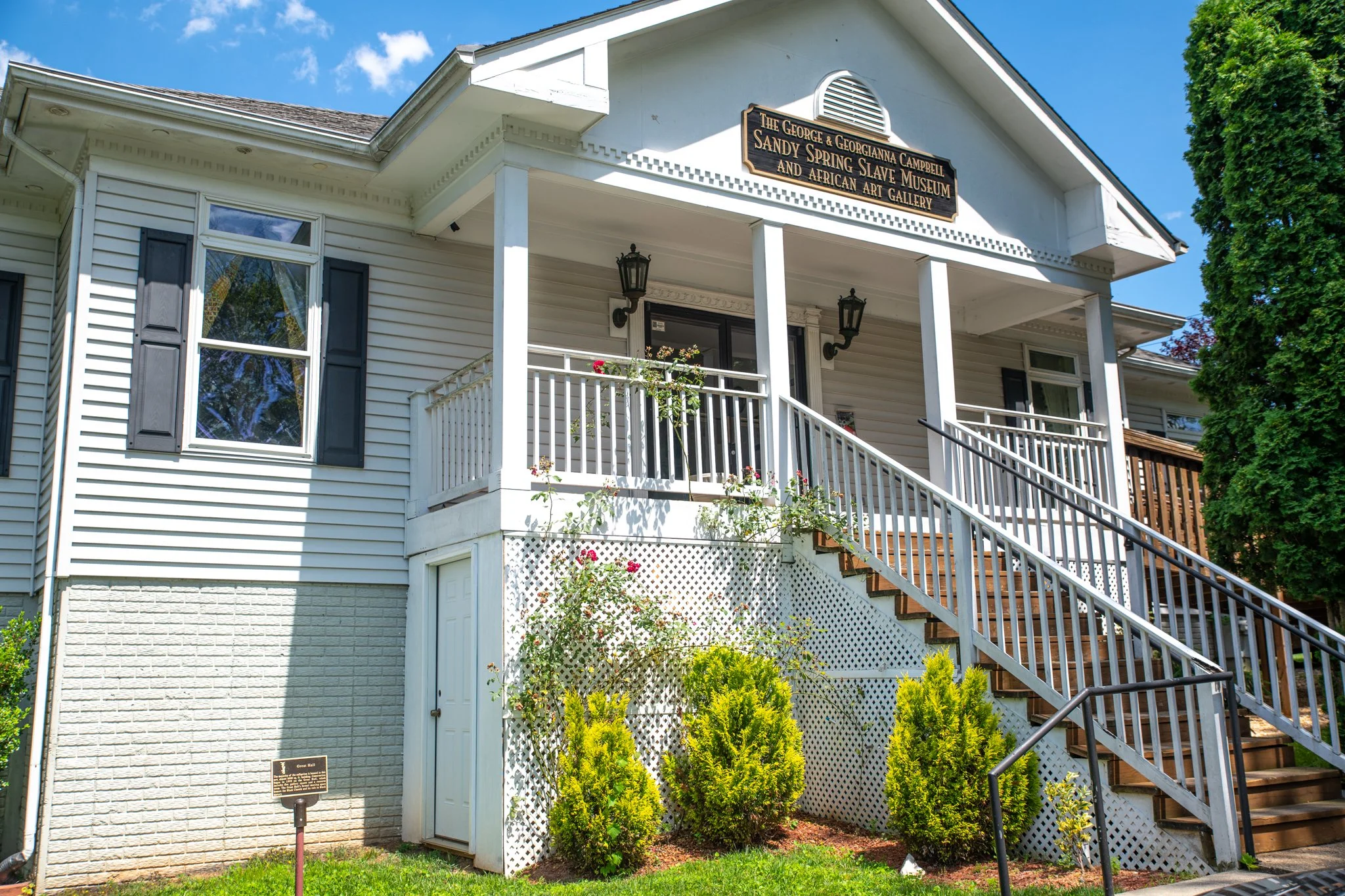
The Sandy Spring Slave Museum & African Art Gallery, located in Sandy Spring, Maryland, preserves the history, culture, and contributions of African Americans not just in Montgomery County, but throughout the African diaspora as well. Founded in 1988 by Dr. Winston Anderson, a Howard University scientist and educator, the museum was created to educate visitors about African heritage, slavery, emancipation, and the achievements of African Americans. The museum is located in an area historically recognized as one of Maryland's earliest free Black communities, making it an important site for understanding local African American history.
The museum campus includes a variety of outdoor exhibits that help tell the story of African and African American experiences. Among the most notable are a replica slave ship, a historic log cabin representing living conditions during the slavery and post-slavery eras, African art and sculptures, and exhibits highlighting the experiences of enslaved people. One exhibit, the "Out of Africa" display, emphasizes that Africans brought to America came from diverse societies that included leaders, warriors, craftspeople, and families with rich cultural traditions. The museum also features the African American Heritage Trail, which highlights local churches, schools, cemeteries, community leaders, and families who played important roles in the development of the Sandy Spring community. These exhibits help visitors understand both the hardships faced by African Americans and their resilience, achievements, and lasting contributions to Maryland and the United States. Through its exhibits and educational programs, the museum preserves stories that might otherwise be forgotten and encourages visitors to learn about the history of civil rights and African American heritage.

