
Download DC Civil Rights Tour App


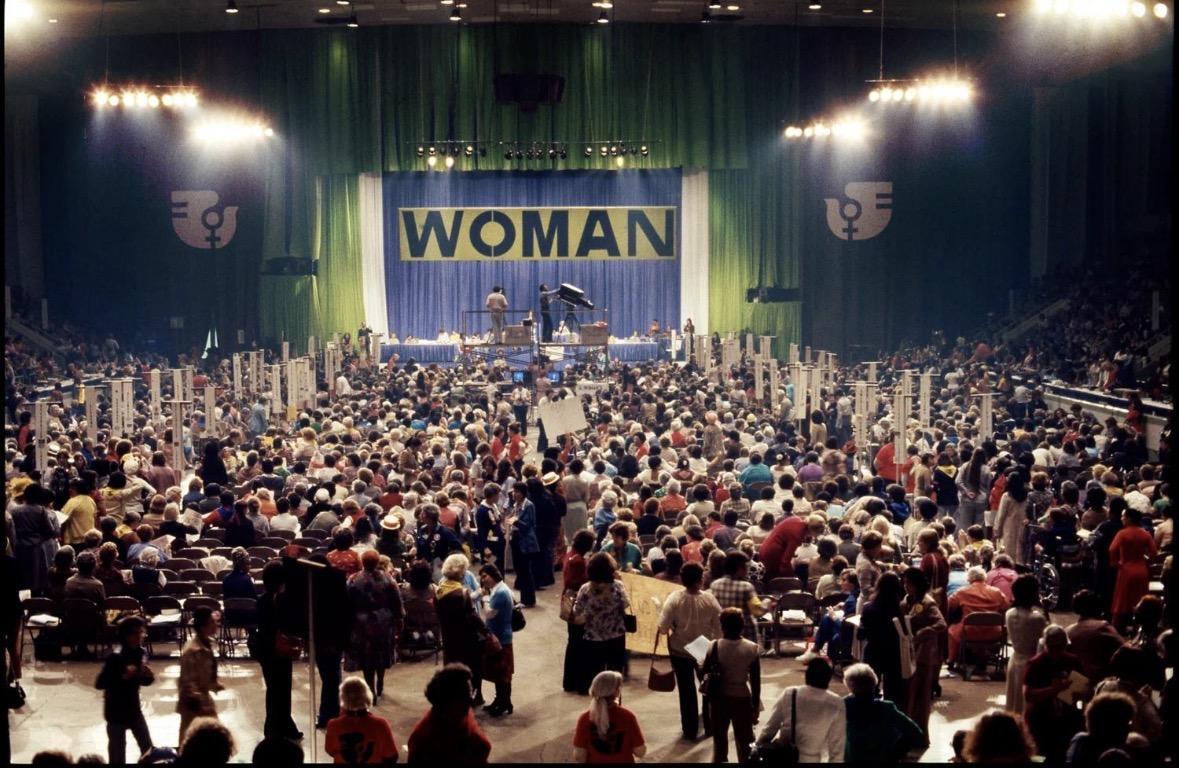
In November of 1977, Houston became the center of a historic and deeply complex moment in the American struggle for equality. The National Women’s Conference was not just a large gathering—it was the first and only time the United States government formally supported a national conversation about women’s rights. That alone makes it extraordinary. But what truly defines this event is not just what was organized, but what was revealed.
Over 2,000 delegates from every U.S. state and territory came together, joined by tens of thousands of observers. They represented a wide range of identities, experiences, and perspectives. Some were seasoned activists who had spent years organizing for change, while others were stepping into political spaces for the first time. Many came with a shared belief in equality, but they did not all agree on what that equality should look like. That tension is what made the conference so powerful—and so real.

The women who gathered in Houston were not a single, unified group. They were divided by race, class, religion, region, and ideology. Black women spoke about the ways racial discrimination compounded gender inequality. Latina and Indigenous women raised concerns about cultural erasure and economic marginalization. Working-class women emphasized the need for childcare, fair wages, and labor protections, while others focused on legal equality through measures like the Equal Rights Amendment. LGBTQ+ rights, which were still highly stigmatized at the time, were also brought into the conversation, challenging many attendees to expand their understanding of inclusion.
These conversations were not always comfortable. There were disagreements, moments of conflict, and competing priorities. But rather than weakening the movement, this diversity forced it to become more honest and more inclusive. The conference became a space where women had to confront the reality that equality is not one-dimensional. It cannot be achieved without acknowledging the different barriers people face.
One of the most significant figures at the conference was Congresswoman Barbara Jordan of Texas. As a Black woman in a position of national leadership, her presence carried profound symbolic weight. Her speech emphasized that equality is not a special interest—it is a constitutional and moral principle. She grounded the conference in the idea that expanding rights for women strengthens democracy itself. Her voice reflected both the progress that had been made and the distance still left to go.
By the end of the conference, delegates voted on and adopted the National Plan of Action, a wide-ranging set of proposals addressing key issues such as education, employment, healthcare, childcare, reproductive rights, and legal protections. This plan was ambitious. It was not just about recognizing inequality—it was about actively dismantling it. The document reflected both consensus and compromise, shaped by the debates that had taken place throughout the conference.
However, the significance of the National Women’s Conference cannot be understood without also acknowledging the resistance it faced. Just outside the official gathering, conservative groups organized a counter-conference, opposing many of the policies being discussed. This opposition highlights an important truth: progress has never been uncontested. The push for gender equality did not unfold in isolation—it existed within a broader national debate about values, tradition, and the role of women in society.
This dual reality—the progress inside the conference and the resistance outside of it—captures why this event remains so historically important. It was not a moment of easy unity, but one of active struggle. It showed that social change requires not only vision, but persistence in the face of disagreement and opposition.
The legacy of the 1977 National Women’s Conference extends far beyond the four days it lasted. It helped bring issues like equal pay, reproductive rights, and political representation into the national spotlight. It created a framework for advocacy and demonstrated the power of collective action. Perhaps most importantly, it set a precedent: it proved that when women organize on a national scale, they can influence policy, shape public discourse, and demand recognition.
At the same time, the conference serves as a reminder that the work it began is unfinished. Many of the issues debated in Houston—economic inequality, access to healthcare, representation in leadership, and bodily autonomy—are still central to political conversations today. This continuity is not a sign of failure, but of the enduring complexity of achieving true equality.
What makes this site meaningful is not just that history happened there, but that it represents a moment when people chose to confront difficult questions rather than avoid them. It reflects the courage it takes to speak, to disagree, and to persist. The 1977 National Women’s Conference was not a final victory—it was a powerful step in an ongoing movement, one that continues to evolve and demand attention.

