
Download DC Civil Rights Tour App


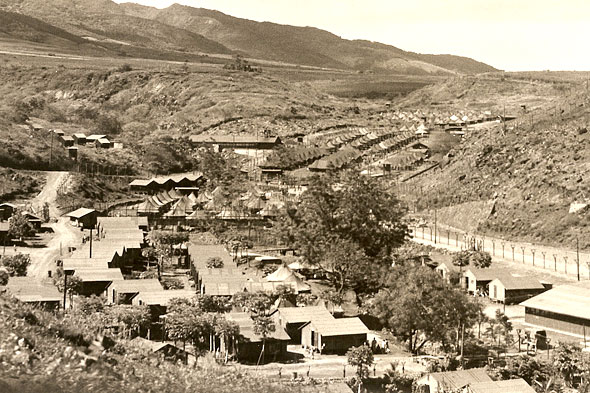
Located in a hidden gulch near Waipahu on the island of Oahu, Honouliuli National Historic Site preserves the history of the largest and longest-used confinement site during World War II. The camp opened in 1943 and closed in 1946, and it was run by the U.S. Army, holding approximately 400 civilian internees and 4,000 prisoners of war. The majority of the internees were Japanese Americans who were American citizens by birth but were suspected of disloyalty to the United States following the attack on Pearl Harbor. By the end of the war, roughly 2,000 people of Japanese descent from Hawaii had been interned, none of whom were ever found guilty of sabotage, espionage, or any other crime against the United States. Internees nicknamed the isolated site "jigoku dani," or "hell valley," because of its remote location deep in a gulch. After the war, the site was abandoned and largely forgotten for decades until researchers from the Japanese Cultural Center of Hawaii rediscovered its exact location in 2002 using archived materials. President Barack Obama designated the site a National Monument in 2015, and it was redesignated Honouliuli National Historic Site in 2019 as part of ongoing efforts to preserve the site and eventually open it to the public.

