Download Civil Rights Tour App


In 1955, you could buy two cents’ worth of bubble gum at Bryant’s Grocery & Meat Market—but for a fourteen-year-old boy from Chicago, that small transaction cost him his life. Bryant’s Grocery & Meat Market is a landmark connected to Emmett Till. This is where Till was accused of behaving inappropriately toward a white woman named Carolyn Bryant. In this story, I will explain what happened before and after Emmett Till’s death and how this location became important in history.
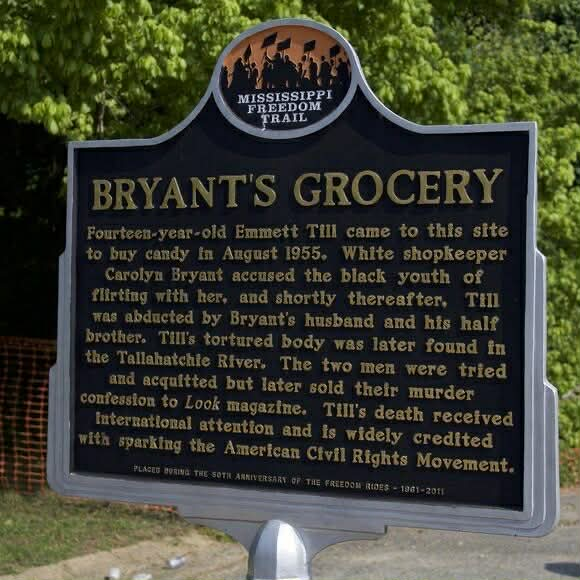
Bryant’s Grocery & Meat Market was owned by Carolyn Bryant and her husband, Roy Bryant. In mid-August 1955, Emmett Till traveled from Chicago to visit his relatives in Money, Mississippi. Before leaving, his mother, Mamie Till, warned him to be careful around white people in the South. On August 24, 1955, Till went to the store with his cousins to buy candy. What exactly happened inside the store is still debated, but Carolyn Bryant later accused him of whistling at her.This accusation led to events that would end in Emmett Till’s kidnapping and murder, while some accounts later suggested that his mother, Mamie Till, had taught him to whistle to help with his stutter, although this detail is not fully confirmed.
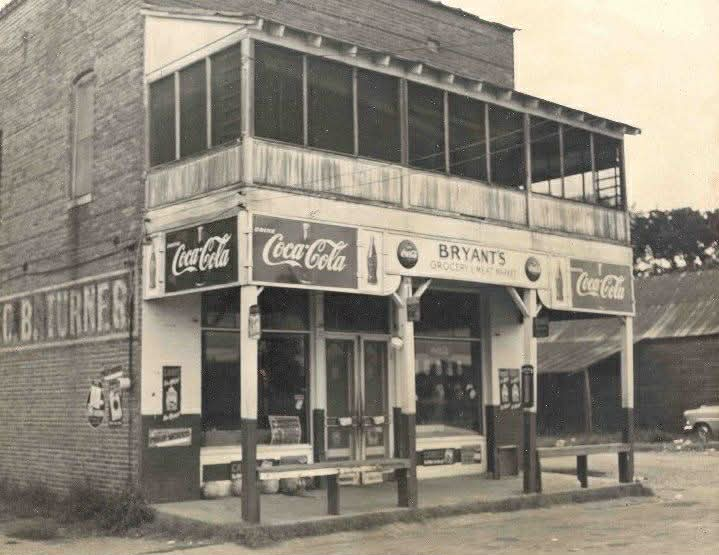
Have you ever wondered what happened to Bryant’s Grocery & Meat Market after the trial of Emmett Till? After the trial, the store lost business and eventually shut down due to a boycott, mainly by Black community members. Roy Bryant and Carolyn Bryant Donham left the area in the mid-to-late 1950s as the store closed, and for decades the market remained abandoned, falling into serious disrepair. In the 2000s, the location gained recognition as part of the story of the Murder of Emmett Till and became included in efforts to preserve important Civil Rights Movement sites, leading historians and preservation groups in the 2000s–2010s to begin working to save and restore the building because of its historical importance. In 2018, the site was added to the National Register of Historic Places, recognizing its role in U.S. history, and more recently, the building has been moved and is being restored to protect it from decay and flooding, with plans to preserve it as an educational historic site that helps people understand where key events began and encourages them to learn more about the past.
Most people don’t know what happened to the Bryant family after the death of Emmett Till. Roy Bryant and J. W. Milam later admitted to the killing in a magazine interview, though they could not be retried because of double jeopardy. Both men lived quietly afterward; Milam died in 1980, and Bryant died in 1994. Carolyn Bryant Donham testified during the trial and later lived a more private life, though decades later, questions about her original accusations and testimony became widely discussed. She died in 2023. Many Black witnesses and residents connected to the case faced threats and intimidation—some left the area for their safety, while others stayed and lived with the long-term impact. Overall, the people involved had very different paths: some avoided legal consequences, while others risked their lives or became important voices in history.
In conclusion, the events surrounding Emmett Till had lasting effects not only on Bryant’s Grocery & Meat Market but also on the people involved and the community as a whole. The store’s closure, the lives of those connected to the case, and the eventual preservation of the site all show how impactful this moment in history was. While some avoided consequences, others showed bravery and helped bring attention to injustice. This case remains important today because it helps people understand the past and the role it played in shaping the Civil Rights Movement.