
Download DC Civil Rights Tour App


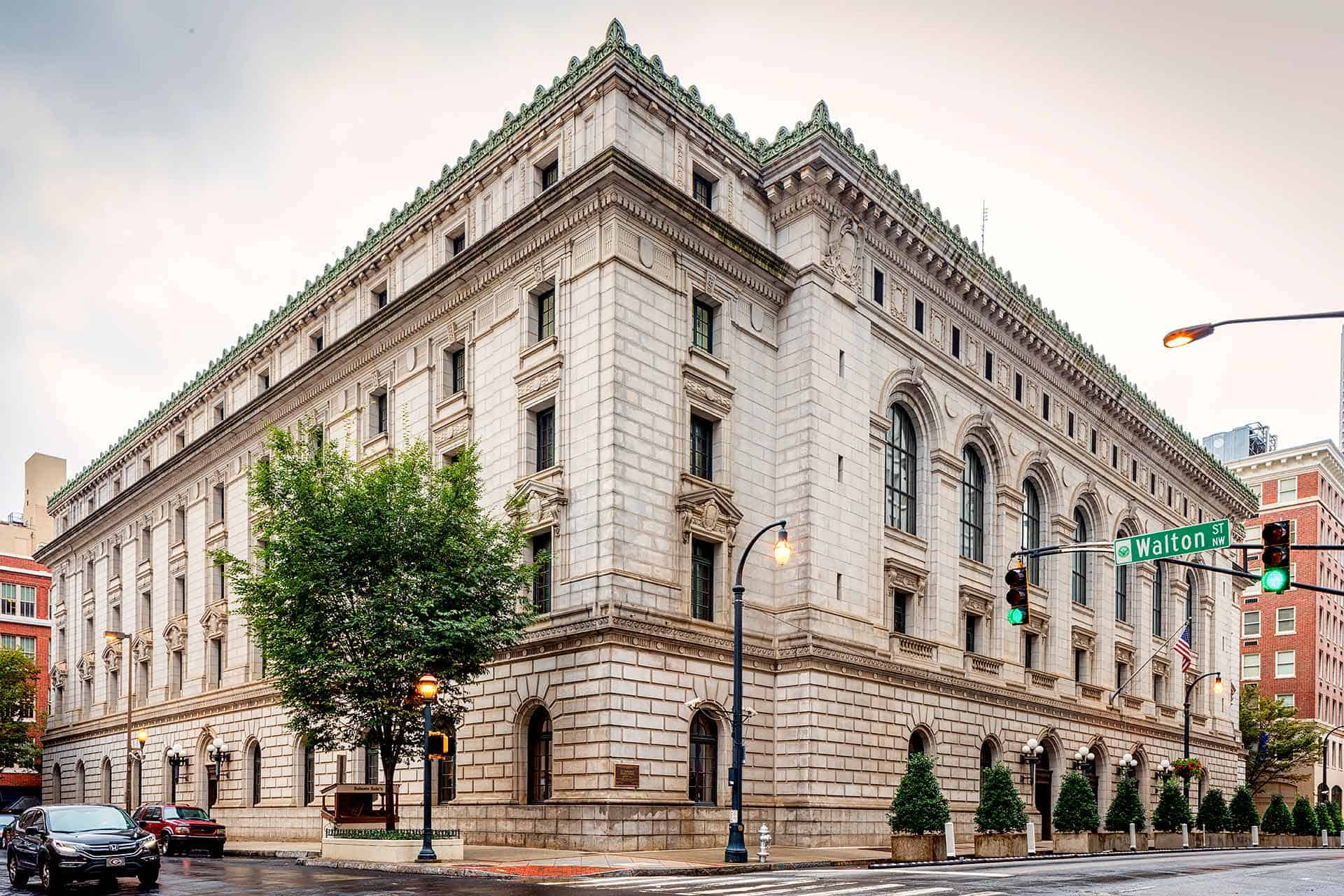
The Elbert P Tuttle Courthouse in Atlanta, Georgia played an important part in the CivilRights Movement in the 1950s and 1960s. When the building was completed in 1910, it wasused as both a courthouse and a post office, but later it became the United States Court ofAppeals for the 5th Circuit. During the Civil Rights Movement, this court ensured thatdesegregation and voting rights laws were upheld in Georgia. The most important case that thejudges upheld was the Brown vs Board of Education Case which led to desegregation in schools,a very unpopular idea in Georgia at the time.
The chief judge for the majority of the Civil RightsCases was Elbert Parr Tuttle, a former soldier and pro bono lawyer, who was appointed to therole in 1954 by President Eisenhower. After the Civil Rights Movement, Tuttle was given thePresidential Medal of Freedom in 1981 for his work with Civil Rights, and the courthouse that heworked at for 14 years was named after him in 1989.
The Elbert P Tuttle Courthouse is still inuse today, as the Court of Appeals for the 11th Circuit, and it has seen many high profile casessuch as the 2000 Gonzalez vs INS custody battle and the 2006 Selman vs Cobb County SchoolDistrict case over the role of religion in biology textbooks.

