Download Civil Rights Tour App


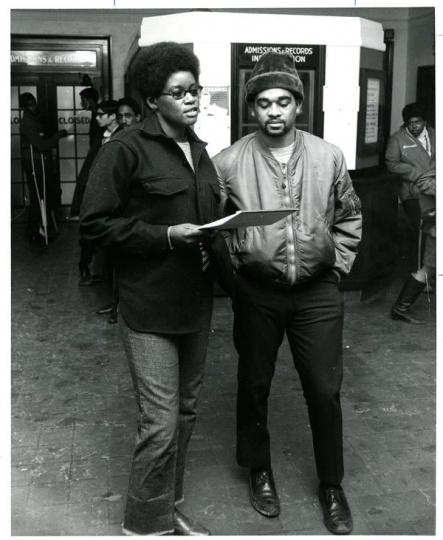
On January 14 and 15, 1969, approximately seventy Black students at the University of Minnesota in Minneapolis occupied administrative offices inside Morrill Hall in a landmark protest against racial inequality in higher education. Organized by the Afro-American Action Committee (AAAC), the demonstration challenged the university's limited support for Black students and demanded meaningful changes to curriculum, scholarship administration, and educational opportunity.
The protest developed during a period of significant political and social change in the United States. The civil rights movement had challenged racial segregation and discrimination, but African American students at predominantly white universities continued to encounter isolation, unequal opportunities, and inadequate representation in academic programs.
At the University of Minnesota, Black students had begun organizing through Students for Racial Progress, which later became the Afro-American Action Committee. The assassination of Reverend Dr. Martin Luther King Jr. on April 4, 1968, intensified student demands for institutional reform.
On April 11, 1968, AAAC representatives presented demands to a university human rights task force. Their proposals included increased scholarships and recruitment opportunities for Black students, improved counseling services, examination of athletic policies, and the establishment of an Afro-American Studies curriculum.
Although university officials established committees to consider these concerns, students became frustrated with the slow pace of change. University President Malcolm Moos faced growing pressure to address the inequalities identified by the organization.
On January 13, 1969, AAAC representatives presented three principal demands: the creation of an Afro-American Studies department by fall 1969, financial support for a proposed Black student conference, and community control of the Martin Luther King Jr. scholarship fund.
The following day, approximately seventy students met with President Moos in Morrill Hall's Regents Room. When negotiations failed to produce immediate agreement, the students moved into the bursar's and records office and began an occupation.
The demonstrators restricted entry into the occupied offices while allowing university employees to leave. Their protest continued for approximately twenty-four hours, drawing attention from university officials, students, community organizations, and the news media.
Important organizers included Rose Mary Freeman, president of the Afro-American Action Committee; Horace Huntley, the organization's secretary; and student activist Anna Stanley. John Wright, a recent University of Minnesota graduate, helped formulate the demands that became central to the protest.
On January 15, university officials and student representatives reached an agreement ending the occupation. The university committed to supporting an academic program leading to a bachelor's degree in Afro-American Studies, providing $5,260 from non-public funds toward the Black student conference, and adding seven community representatives to the fourteen-member Martin Luther King Jr. scholarship board.
The agreement did not grant students every demand exactly as proposed, but it represented a significant institutional response to their organizing.
The university reported approximately $7,229 in expenses and damage associated with the occupation. Criminal proceedings followed. Horace Huntley, Rose Mary Freeman, and Warren Tucker Jr. were indicted in March 1969.
On November 7, 1969, Freeman and Huntley were convicted of unlawful assembly but acquitted of the more serious rioting and property-damage charges. They received suspended ninety-day sentences and one year of probation. Tucker was acquitted of all charges.
Despite the controversy, the protest contributed directly to the establishment of the University of Minnesota's Department of Afro-American Studies in 1969, one of the earliest academic departments of its kind in the United States.
The department later expanded its academic scope and is now known as the Department of African American & African Studies. The university also developed additional educational support initiatives addressing the needs of Black students.
Today, Morrill Hall remains standing at 100 Church Street SE on the university's Minneapolis campus. Its history connects the physical university administration building with an important struggle over racial representation, student participation, and access to higher education.
The Morrill Hall takeover demonstrates how organized student activism helped transform university policies and contributed to a broader national movement for racial and educational equality.