
Download Civil Rights Tour App


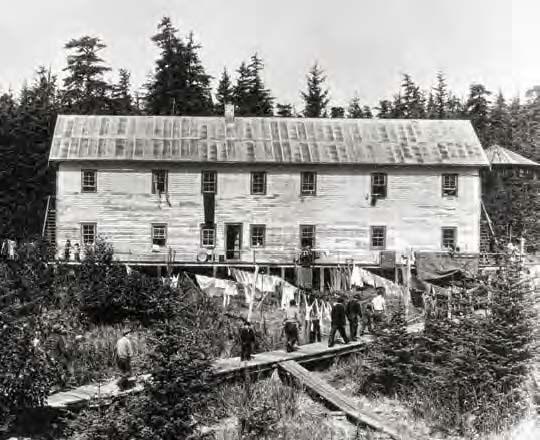
During World War II, Funter Bay on Admiralty Island in Southeast Alaska became the site of a traumatic chapter in the history of the Unangax̂ people, also historically known as the Aleuts.
In June 1942, following Japanese military attacks in the Aleutian Islands, the United States government ordered the evacuation of hundreds of Unangax̂ residents from their traditional communities. Although the evacuation was presented as a protective wartime measure, the displaced families were sent to remote camps that were unprepared to provide adequate housing, sanitation, food, or medical treatment.
On June 24, 1942, residents of St. Paul and St. George Islands arrived at Funter Bay aboard the U.S. Army transport Delarof. Families from St. Paul were housed at the abandoned Thlinket Packing Company cannery. The following day, residents of St. George were moved to the former Admiralty Alaska Gold Mine, approximately one mile away on the opposite side of the bay.
The camps offered little protection from Southeast Alaska's cold, wet climate. Many buildings were deteriorating, overcrowded, and poorly equipped. Residents faced inadequate sanitation, unsafe drinking water, insufficient heating, and limited medical services.
Disease, including pneumonia and tuberculosis, spread through the displaced communities. The National Park Service records 32 deaths at Funter Bay, part of the wider loss of life in the Southeast Alaska internment camps.
Despite these conditions, Unangax̂ families worked to improve their surroundings, repair buildings, maintain their religious traditions, and care for one another. Some residents found employment outside the camps, while others helped construct better facilities.
In 1944, the return of evacuated residents to the Pribilof Islands began. Many families returned to find their communities damaged and their belongings lost or destroyed. The wider wartime displacement and its consequences continued beyond the closure of the Funter Bay camps.
For decades, survivors and their descendants worked to make this history known and seek recognition of the injustices they endured. Their efforts contributed to the Aleut Restitution Act of 1988, which formally acknowledged wrongdoing and provided restitution.
Today, the remains of the Funter Bay cannery, the former mine camp, and the Unangax̂ burial ground preserve the memory of forced displacement and the resilience of Alaska Native communities. Their history is an important reminder of the consequences of discrimination, failures of government responsibility, and the continuing struggle for Indigenous civil rights.