Download Civil Rights Tour App


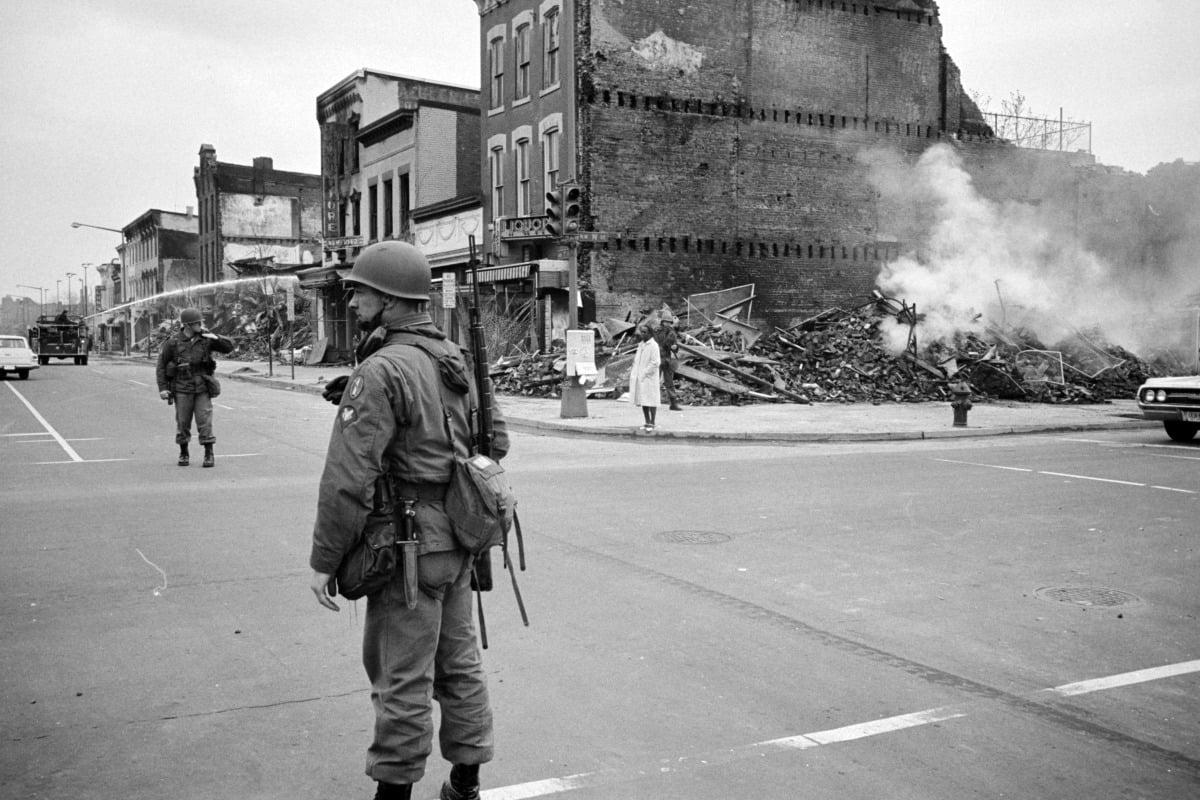
U Street was an important center of African American businesses, education, and community life in Washington, DC, during the twentieth century. The neighborhood was sometimes called Black Broadway because of its theaters, restaurants, and successful Black-owned businesses. Despite this success, African Americans in Washington still faced racial discrimination in employment, housing, and public services. On April 4, 1968, civil rights leader Martin Luther King Jr. was assassinated in Memphis, Tennessee. As news of his death spread, people gathered near the intersection of 14th and U Streets NW. Civil rights activist Stokely Carmichael encouraged local businesses to close in respect for King. Later that evening, crowds broke windows, and looting began near the intersection. The unrest continued for several days and spread to other parts of Washington, damaging businesses and homes.
The events of April 1968 had a lasting effect on the U Street neighborhood. Many businesses closed, and some buildings remained damaged or empty for years. The unrest showed the frustration that many residents felt about racism, poverty, and unequal opportunities, although the destruction also harmed local families and businesses. Community organizations, residents, and city leaders later worked to rebuild the area. In 1986, the Frank D. Reeves Municipal Center opened at 14th and U Streets, becoming an important part of the neighborhood’s recovery. New businesses, restored historic buildings, and a Metrorail station helped bring activity back to U Street. Today, the intersection remains a public crossroads and an important location for understanding the civil rights struggles and changes that shaped Washington, DC.