
Download Civil Rights Tour App


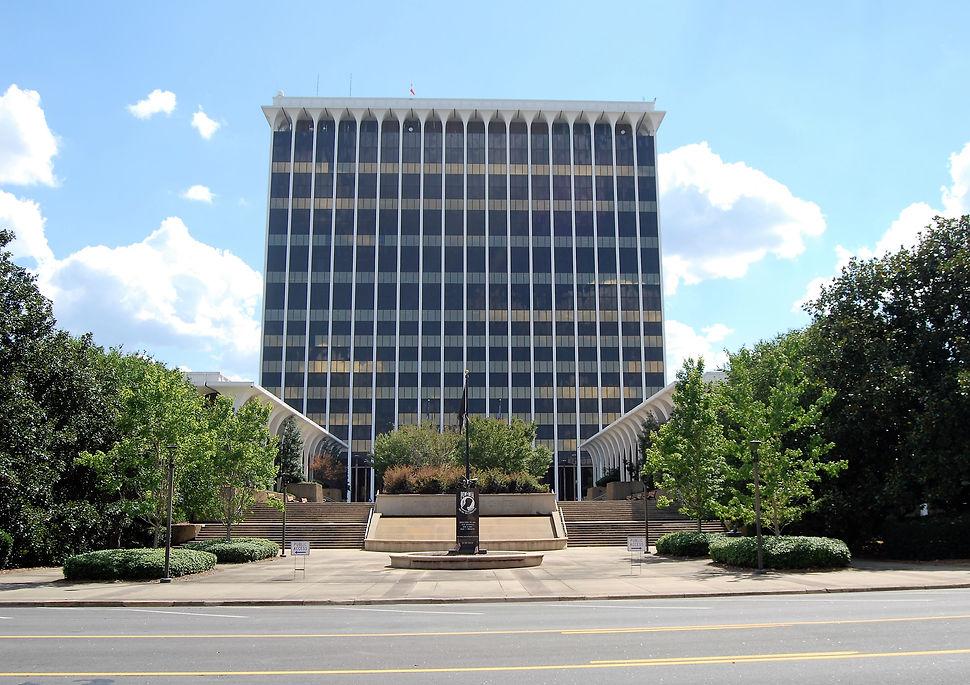
On July 4, 1944, the Muscogee County Courthouse in Columbus, Georgia, became the site of an important challenge to racial discrimination in American elections.
At the time, Georgia's Democratic Party excluded African American citizens from its primary elections. Because the Democratic Party dominated politics throughout much of the South, winning its primary often effectively determined the outcome of the general election. Excluding Black voters from these primaries severely restricted their political influence.
Primus E. King, an African American barber and minister, was registered to vote in Muscogee County. Following the United States Supreme Court's decision in Smith v. Allwright earlier in 1944, local civil rights leaders organized a legal challenge to Georgia's white primary system.
Dr. Thomas H. Brewer, a Columbus physician and civil rights organizer, helped coordinate the effort. King volunteered to test the exclusionary voting rule.
On July 4, 1944, King entered the Muscogee County Courthouse and attempted to vote in the Democratic primary election. Election officials refused to allow him to cast a ballot because he was Black, and a law enforcement officer escorted him from the building.
After being turned away, King met with attorney Oscar D. Smith Sr. and began legal proceedings against members of the Muscogee County Democratic Executive Committee, including its chairman, Joseph E. Chapman Jr.
The case, known as King v. Chapman, argued that excluding qualified citizens from a primary election because of race violated constitutional protections.
On October 12, 1945, United States District Judge T. Hoyt Davis ruled in King's favor. The court found that Georgia's Democratic primary was an integral part of the state's electoral process and that excluding King because of his race violated his constitutional rights.
The court awarded King one hundred dollars in damages, plus interest and court costs. Although the defendants appealed, the United States Court of Appeals for the Fifth Circuit upheld the judgment on March 6, 1946, in Chapman v. King.
The ruling helped dismantle Georgia's all-white Democratic primary system and opened an important avenue for African American political participation. It encouraged voter registration efforts and contributed to the broader movement for civil rights in Georgia.
However, the decision did not immediately end every obstacle to Black voting. Intimidation, discriminatory registration practices, and other forms of voter suppression continued in the South.
Primus King remained an important symbol of the struggle for equal voting rights. His case demonstrated how ordinary citizens, supported by community organizers and legal advocates, could challenge discriminatory institutions through the courts.
In 2015, the Georgia Historical Society and its partners dedicated a historical marker near the site of the former Muscogee County Courthouse to commemorate King's contribution.
Today, the Primus King historical marker in Columbus honors a landmark struggle for racial equality, voting rights, and equal participation in American democracy.