Download Civil Rights Tour App


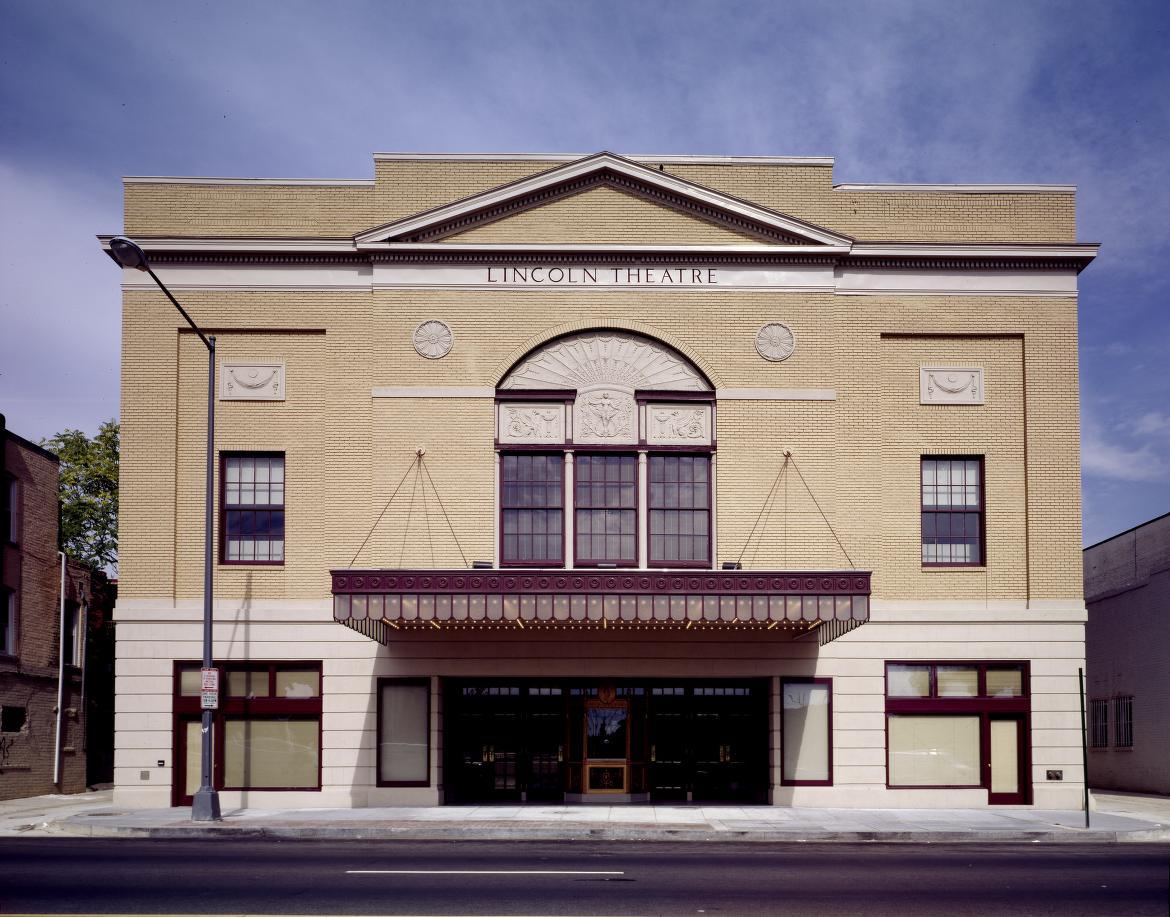
The Lincoln Theatre opened in 1922 at 1215 U Street NW in Washington, DC, when racial segregation limited where African Americans could watch movies and enjoy live entertainment. It was designed by architect Reginald W. Geare and developed by theater owner Harry M. Crandall. The theater was built to serve Black audiences who were often excluded from entertainment venues used by white Washingtonians. It showed popular movies and later became known for music and live performances. The nearby Lincoln Colonnade also hosted dances, community gatherings, and charity events. Famous African American performers such as Duke Ellington, Billie Holiday, Cab Calloway, and Ella Fitzgerald appeared at the theater or its associated performance spaces. The Lincoln Theatre helped make the U Street neighborhood an important center of Black culture and business.
The theater also created employment opportunities for African Americans at a time when many businesses practiced racial discrimination. After the theater changed ownership in 1927, Black employees held many positions, including management and supervisory jobs. As segregation began to end during the 1950s, the theater faced competition from other entertainment venues. The neighborhood suffered serious damage during the unrest following the assassination of Martin Luther King Jr. in 1968, and the Lincoln Theatre eventually closed in 1983. Preservation efforts helped save the building, and it reopened on February 4, 1994, after restoration. Today, the original building still operates as a theater and hosts concerts, cultural programs, and community events. It remains an important reminder of how African Americans built strong cultural institutions despite segregation.