
Download Civil Rights Tour App


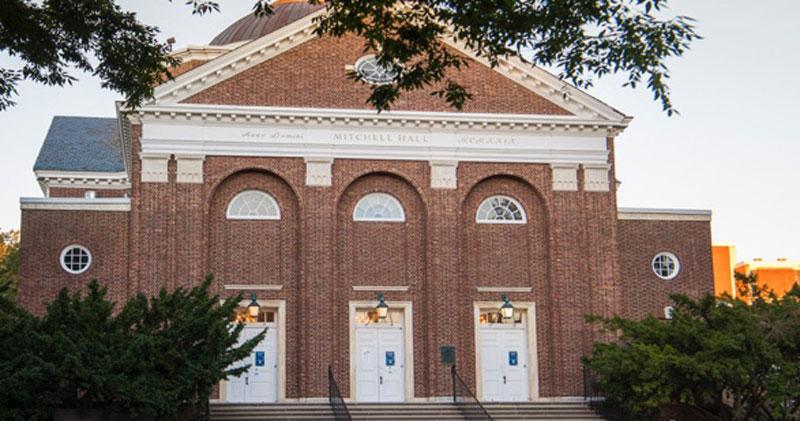
In Newark, Delaware, the University of Delaware became the setting for an important early legal battle over LGBTQ+ rights, freedom of expression, and employment discrimination.
Richard B. Aumiller joined the University of Delaware as a graduate student in theater in 1972. He later became a lecturer and worked in university theater management during the 1974–1975 and 1975–1976 academic years.
Aumiller was openly gay and participated in a campus organization known as the Gay Community, which supported LGBTQ+ students and encouraged greater public understanding. In 1974, he accepted an invitation to serve as the organization's faculty advisor.
During 1975, Aumiller spoke with reporters about homosexuality, discrimination, and the experiences of gay people in Delaware. His comments appeared in newspaper articles published by the Philadelphia Bulletin, the Wilmington News Journal, and the university's student newspaper, The Review.
One of the interviews took place in Aumiller's office in Mitchell Hall on the University of Delaware campus.
University President Edward A. Trabant objected to Aumiller's public statements, arguing that they created the impression that the university supported homosexuality.
In December 1975, Trabant informed senior administrators that he would not approve the renewal of Aumiller's teaching contract for the following academic year.
Aumiller challenged the decision through university grievance procedures. Faculty review committees recommended that he be reappointed, but the university president rejected those recommendations.
In February 1976, Aumiller filed a federal civil rights lawsuit against the University of Delaware and several administrators. He argued that the university had violated his constitutional rights by penalizing him for speaking publicly about LGBTQ+ issues.
After a trial in September 1976, U.S. District Judge Murray M. Schwartz issued a landmark decision on June 21, 1977.
The court concluded that the university had refused to renew Aumiller's employment contract because of his protected public statements about homosexuality. The judge ruled that the university's actions violated the First Amendment.
The court awarded Aumiller back pay and damages. Subsequent proceedings in 1978 confirmed the financial settlement, while Aumiller agreed not to pursue reinstatement in exchange for the university's agreement not to appeal.
The case did not establish a general nationwide ban on sexual-orientation employment discrimination. Instead, it provided an important constitutional victory protecting a public university employee's freedom to speak about gay rights and equal treatment.
Today, Aumiller v. University of Delaware is remembered as an important chapter in Delaware's LGBTQ+ history. It highlights the importance of freedom of expression, academic freedom, and the right to advocate publicly for civil rights without unlawful retaliation.